
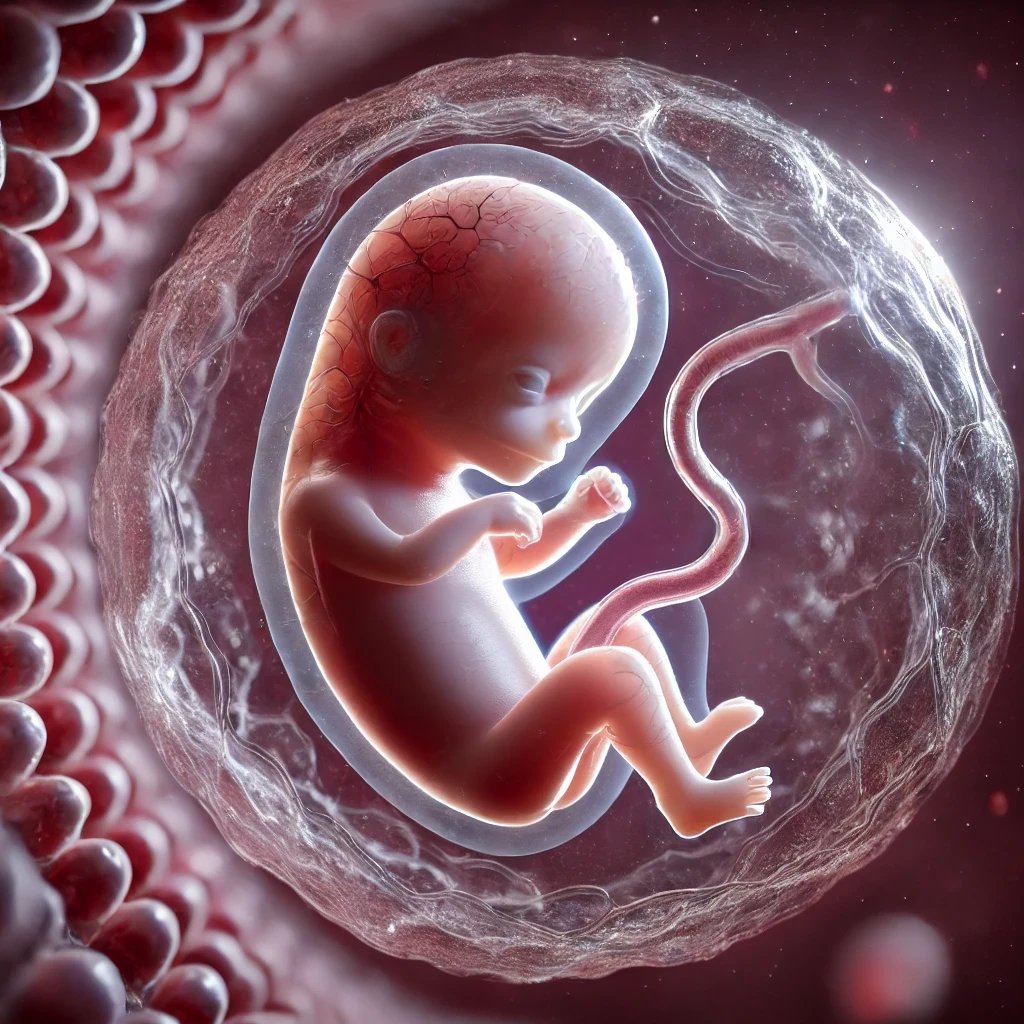
7 Weeks Pregnant: Leg Buds Appear and the Head Grows Fast
- Longitude 1,3 cm sommet du crâne–coccyx
- De la taille d'a blueberrycomparaison indicative
Toutes les mesures sont approximatives : ce sont des moyennes de référence et chaque grossesse est différente. Votre médecin évalue la croissance de votre bébé lors des contrôles et des échographies.
At 7 weeks pregnant, in the second month, the embryo measures about 1.3 cm, like a blueberry. The leg buds appear, the head grows fast and the eyes and ears form. The heart beats regularly. Nausea, tiredness and needing to pee usually carry on.
The key points of week 7
- The leg buds appear.
- The head grows fast because the brain is developing.
- The structures of the eyes and ears form.
- If you have not had your first visit yet, now is the time.
How your baby is doing at week 7
Your baby measures about 1.3 cm, like a blueberry. Every week of the first trimester brings big changes.
Legs and arms
Alongside the arm buds, the leg buds appear. Little by little they will lengthen and form hands and feet.
A growing brain
The head grows faster than the rest of the body because the brain is forming. Several regions take shape that will have different jobs.
Eyes, ears and heart
The eyes and ears keep forming. The heart beats regularly and pumps blood through a system of vessels that is also growing.
The umbilical cord
The umbilical cord is forming, which will link the baby to the placenta. Oxygen and nutrients will arrive through it and waste will leave. During the first trimester the placenta matures gradually until it takes over this job completely.
Your body and symptoms in week 7
Your uterus is growing, although from the outside most women still have no bump.
Cravings and going off certain foods are also common at this stage. If you crave things that are not food, like soil or excessive amounts of ice, mention it to your doctor: it can be a sign of low iron.
When to call your doctor or go to the emergency room
Seek medical care immediately if you have:
- Heavy bleeding or bleeding with clots.
- Severe abdominal pain, especially on one side.
- Vomiting that stops you keeping fluids down.
- Burning when you pee with fever or back pain.
- Severe dizziness or fainting.
In the US call 911. In other countries, go to the nearest emergency room.
Check-ups and tests at this stage
Every pregnancy is different: your doctor decides which tests you need and when.
| Check-up | When it is usually done | What for |
|---|---|---|
| First prenatal visit | If you have not had it yet, now | Medical history, blood pressure, weight and schedule of check-ups. |
| Dating ultrasound | In the first trimester | Confirm how far along you are and your due date. |
| Blood and urine tests | At the first visit | Blood group, Rh factor, anemia and infections. |
Tips for week 7
- Fiber and water: fruit, vegetables, pulses and whole grains help with constipation.
- Small meals: eating little and often helps with both the nausea and your energy.
- Activity: gentle walking usually helps your mood and your bowel, unless your doctor says otherwise.
- Share your questions: in the community you can talk to other women in the first trimester.
- For your partner: coming to the first ultrasound and keeping an eye on symptoms helps you share the experience.
Questions for your next visit
- What is my due date?
- What do I do about constipation?
- What exercise can I do?
- When do I have the first-trimester screening tests?
Week 7 checklist
- Have your first prenatal visit
- Keep taking folic acid
- Drink enough water every day
- Write down your symptoms and questions
- Think about when and how you will share the news
Sources
Calculez votre date prévue d'accouchement
Découvrez de combien de semaines et de mois vous êtes enceinte et quand votre bébé naîtrait. C'est une estimation : votre médecin la confirme, normalement lors de la première échographie.
Le calcul se fait sur votre appareil : la date n'est ni envoyée ni enregistrée. On ajoute 280 jours (40 semaines) au premier jour de vos dernières règles, en ajustant l'écart si votre cycle n'est pas de 28 jours ; 266 jours à la date de conception ; et 261 ou 263 jours à un transfert d'embryon de FIV de 5 ou 3 jours. Selon l'ACOG, l'échographie du premier trimestre est la méthode la plus précise pour dater la grossesse : si votre médecin vous donne une autre date, fiez-vous à la sienne. Source : ACOG. Methods for Estimating the Due Date.
Questions fréquentes sur la semaine 7
How many months is 7 weeks pregnant?
7 weeks of pregnancy is the second month, within the first trimester. About five weeks have passed since fertilization.
How big is the baby at 7 weeks?
About 1.3 cm, like a blueberry. It is an average and every embryo grows at its own pace.
What can be seen on an ultrasound at 7 weeks?
Usually the pregnancy sac and the embryo, and very often the heartbeat. The ultrasound also helps work out how far along the pregnancy is.
Is constipation normal at 7 weeks?
Yes, it is common because of the hormonal changes. Drinking water, eating fiber and moving about helps. If you need a laxative, ask your doctor which one is safe.
Is it normal to have no bump at 7 weeks?
Yes. The uterus is growing, but it is still inside the pelvis. Most women start to notice a bump in the second trimester, especially in a first pregnancy.